
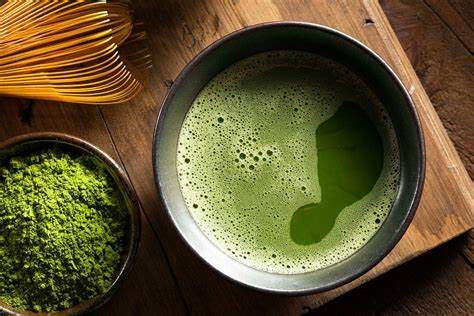
What Is Matcha Tea?
Matcha is a type of green tea made from whole, powdered tea leaves. It’s cultivated from plants that have a very precise and regimented growing process, and is made from Camellia sinensis, the same plant as white, green, black and oolong teas.
This superfood has roots stemming from traditional practices in China and Japan, and gets its unique savory, umami taste and antioxidant boost from a labor-intensive growing process that involves shading and tarping the tea fields.
Being shade-grown gives it a balance of flavor between catechins, the compound that gives matcha its bitterness and astringency, and the sweet amino acid L-Theanine. Amino acids are the molecules that form the basis of proteins and are essential for proper functioning of the body. It also allows these beneficial elements to concentrate within the leaf, and since the whole leaf is consumed—rather than just a decoction like many other teas—it’s much more robust.
Lauren Danson, CEO of Mizuba Tea Co., finds it helpful to use the analogy of champagne when thinking of matcha. “For example, matcha will always be powdered green tea, but any powdered green tea produced outside of Japan will not intrinsically be matcha,” she says.
The tea has a robust and earthy flavor and even blends well with a variety of milks, especially soy and oat.
5 Health Benefits of Matcha Tea
The list is long when it comes to the upsides of green tea, yet there has been less research performed specifically on matcha. Many of the active nutrients in matcha such as polyphenols, caffeine and amino acids, however, have been noted for a wide range of beneficial health properties.
1. It May Improve Cardiovascular Health
Micronutrients are abundant in matcha, especially one known as epigallocatechin-3-gallate (EGCG), a plant compound that can have positive health effects. Research gathered on EGCG and its impact on cardiovascular and metabolic health shows it can “exhibit a wide range of therapeutic properties including anti-atherosclerosis, anti-cardiac hypertrophy, anti-myocardial infarction, anti-diabetes, anti-inflammatory and antioxidant,” according to a study published in the Journal of Ethnopharmacology[1]. Matcha helps support the healthy functioning of the cardiovascular system—preventing plaque build-up, thickening of heart tissue, as well as other conditions such as heart attacks.
2. It’s Rich in Antioxidants
Antioxidants remove bad molecules from the body, and decrease oxidative stress. Matcha, and green teas in general, are high in substances that act as antioxidants, including catechins. “Tea also contains flavonoids, compounds reported to have antioxidant properties having many beneficial effects,” points out a study in Food Research International[2]. “Tea flavonoids reduce inflammation, have antimicrobial effects and prevent tooth decay.”
3. It May Have Cancer-Fighting Effects
Many of the beneficial components of matcha have been researched for their anti-cancer properties. There are extensive cohort studies which examine consumption of green tea and inverse effects of gastric cancers. One such study in Cancer Causes & Control consisting of over 1,400 individuals, found consumption of green tea was associated with lower risk of stomach cancer.
Catechins and gallic acid, phytochemicals in matcha, have been used in conjunction with chemotherapy treatments, and have been researched to see if they improve efficacy of certain chemotherapy drugs.
4. It May Spur Weight Loss
The National Institute for Health states that green tea “increases energy expenditure and fat oxidation, reduces lipogenesis and fat absorption,” and has a “possible modest effect on body weight.”
One clinical trial in Obesity followed 76 overweight individuals for four months, determining that daily consumption of a green tea beverage aids in weight loss.
5. It May Give You Healthy, Glowing Skin
Matcha powder and green teas are not only good for internal conditions but can be used to improve skin health as well. “Green tea constituents may be useful topically for promoting skin regeneration, wound healing or treatment of certain epithelial conditions such as aphthous ulcers, psoriasis, rosacea and actinic keratosis,” notes the Food Research International study.
And Colleen Tyler, a naturopathic physician and avid tea drinker says “compounds such as caffeine and EGCG make matcha the perfect addition to your skincare routine and can be used as a simple face mask to help subdue redness and give your skin a healthy glow.”